
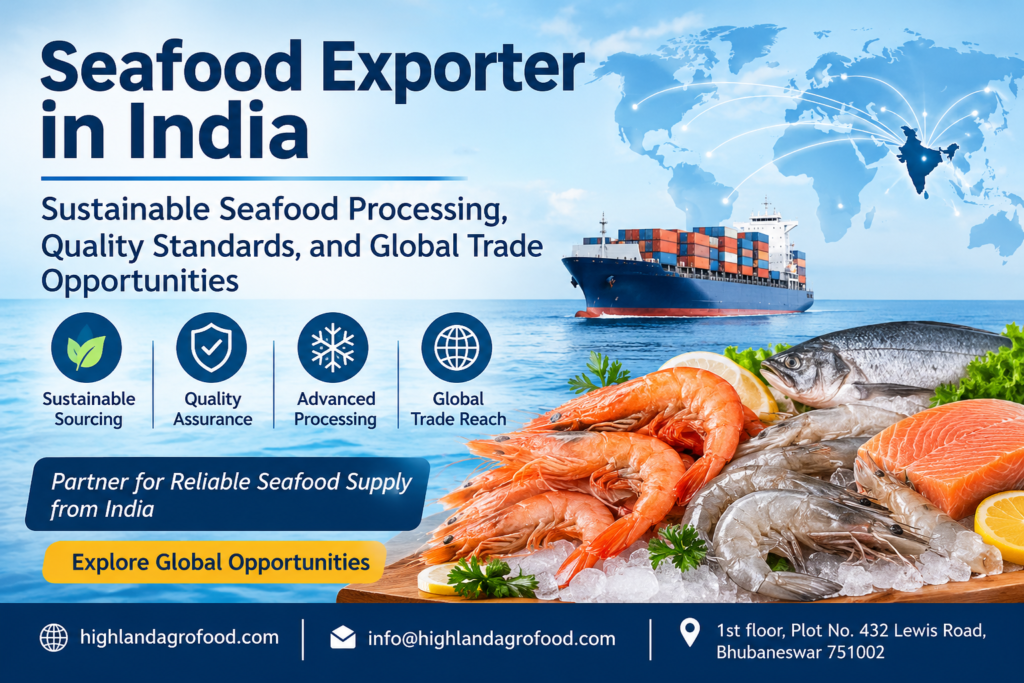
The global seafood industry is growing as consumers increasingly include fish, shrimp, and other marine products in their diets. Seafood is an important source of protein and other nutrients, making it a regular part of food consumption across many countries. Restaurants, hotels, supermarkets, and food processing companies depend on reliable seafood suppliers to meet customer demand. India has an important role in this international market because of its coastal resources, aquaculture activities, processing facilities, and export infrastructure.
A trusted seafood export business connects Indian seafood producers with international buyers while maintaining product quality and food safety. A Seafood Exporter in India must understand international market requirements, proper handling procedures, processing technology, and cold-chain management. Buyers also expect accurate product information, traceability, and timely deliveries. These factors are becoming increasingly important as the global seafood industry focuses on quality, sustainability, and responsible sourcing.
The seafood export sector is also adapting to changing consumer preferences. Demand for frozen seafood, convenient food products, and responsibly sourced marine products is encouraging businesses to improve their production and supply chain practices.
Growing Global Demand for Indian Seafood Products
India has a well-established seafood industry supported by marine fishing, aquaculture, processing facilities, and export networks. Coastal states contribute to seafood production, while processing and logistics businesses help connect domestic products with international markets.
Shrimp, fish, squid, cuttlefish, and other seafood products serve different consumer and commercial requirements. Their popularity depends on nutritional value, availability, preparation convenience, and regional food preferences.
Several factors are supporting the demand for Indian seafood:
- International consumption: Seafood remains an important food category in many countries.
- Restaurant demand: Hotels, restaurants, and catering companies require dependable seafood supplies.
- Frozen food popularity: Frozen products offer convenient storage and preparation options.
- Retail expansion: Supermarkets provide consumers with different packaged seafood choices.
- Product diversity: International buyers can source various species, sizes, and processing styles.
India’s seafood industry also benefits from its ability to supply different product forms. Depending on customer requirements, seafood can be exported fresh, frozen, chilled, peeled, cleaned, processed, or packaged.
Understanding individual market requirements is essential. Import regulations, product specifications, packaging standards, and labelling requirements can vary between countries. Export businesses must consider these factors before preparing shipments.
Seafood Processing Technology and International Quality Standards
Food safety and quality management are essential for seafood exports. Fish and shrimp are perishable products, so careful handling is necessary from harvesting through processing and transportation.
Modern processing facilities follow established procedures to maintain hygiene and reduce contamination risks. The process generally begins with raw material inspection, followed by cleaning, grading, cutting, peeling, freezing, and packaging, depending on the product.
Processing technology helps businesses maintain consistency and improve operational efficiency.
Important quality control practices include:
- Inspecting incoming seafood materials.
- Maintaining clean processing areas and equipment.
- Following employee hygiene procedures.
- Monitoring product temperature during processing.
- Preventing cross-contamination.
- Maintaining batch identification and traceability.
- Conducting quality checks before shipment.
Freezing technology is particularly important for international seafood transportation. Individually Quick Frozen (IQF) technology freezes individual pieces separately, making products easier to portion and handle. Block freezing is another method used for specific commercial requirements.
Frozen seafood is generally maintained at -18°C or below during storage and transportation, subject to applicable product and market requirements. A properly managed cold chain helps protect product quality until delivery.
Highland Agro Food highlights the importance of quality-focused operations, responsible sourcing, and consistent seafood supply in India’s export industry. Businesses that maintain proper processing standards and understand international buyer expectations can build stronger relationships with customers.
Sustainable Aquaculture and Responsible Seafood Sourcing
Sustainability is becoming a major consideration in international seafood trade. Buyers are increasingly interested in understanding where seafood comes from and how it is produced. Responsible sourcing and environmental management are therefore important parts of modern seafood businesses.
Aquaculture supports food production, employment, and economic activity in coastal regions. Shrimp and fish farming provide opportunities for farmers and related businesses. However, responsible management is necessary to protect natural resources and maintain long-term production.
Sustainable aquaculture practices include:
- Monitoring pond and water quality regularly.
- Maintaining appropriate stocking densities.
- Using responsibly managed feed.
- Following farm biosecurity procedures.
- Managing wastewater appropriately.
- Monitoring animal health.
- Maintaining accurate farming and harvesting records.
Traceability is another important element of responsible seafood sourcing. It helps businesses maintain information about the origin of raw materials, processing batches, and product movement through the supply chain.
Technology is supporting these improvements. Digital monitoring systems, automated feeding equipment, water quality sensors, and improved disease management methods can help farmers make informed decisions.
Sustainability also influences international purchasing decisions. Some buyers prefer suppliers who can demonstrate responsible production practices and provide relevant certifications or sourcing information.
By focusing on aquaculture management, traceability, and responsible production, India’s seafood industry can support long-term growth while responding to changing global expectations.
Future Opportunities in India’s Seafood Export Industry
The future of seafood exports will depend on product quality, technological development, market diversification, and reliable international supply chains. India has opportunities to expand its presence by improving processing facilities and developing products that meet changing consumer needs.
Convenient seafood products are becoming increasingly important. Ready-to-cook shrimp, cleaned fish portions, individually frozen seafood, and customised packaging can serve households, restaurants, and commercial food businesses.
Several developments are expected to influence the industry’s growth:
- Advanced processing equipment: Modern machinery can improve production efficiency and consistency.
- Cold-chain development: Better refrigerated storage and transportation can protect product quality.
- Digital traceability: Technology can improve transparency throughout the supply chain.
- Product innovation: New product formats can serve different consumer preferences.
- Market diversification: Developing relationships with buyers in different countries can create new business opportunities.
- Sustainable production: Responsible farming and sourcing can support long-term industry development.
Export documentation and regulatory compliance will remain important. Businesses must understand the requirements of destination markets, including food safety regulations, packaging information, product testing, and shipping documentation.
Building strong relationships with international buyers is equally important. Clear communication, accurate product specifications, consistent quality, and timely shipments help establish business confidence.
India’s seafood industry can strengthen its international position by combining production capabilities with modern processing, responsible sourcing, and effective logistics. Continued investment in these areas can support exporters, farmers, workers, and the wider seafood supply chain.
Conclusion
India’s seafood export industry has an important role in meeting the growing demand for marine and aquaculture products across international markets. Shrimp, fish, squid, and other seafood products provide opportunities for businesses serving different customer segments.
Quality processing, food safety, sustainable aquaculture, and reliable cold-chain management are essential for maintaining international standards. At the same time, technology and traceability are helping businesses improve production and supply chain operations.
With continued investment in responsible sourcing, modern processing facilities, and international market development, India’s seafood industry can build stronger global relationships and support the future growth of seafood trade.
Frequently Asked Questions (FAQs)
1. Why is Indian seafood popular in international markets?
Indian seafood is valued for its product variety, availability, and established processing and export infrastructure. Proper handling and quality management help meet international buyer requirements.
2. How can buyers select a reliable Seafood Exporter in India?
Buyers should evaluate product quality, processing facilities, food safety systems, certifications, traceability, and transportation arrangements before selecting an exporter.
3. What seafood products are commonly exported from India?
Common seafood exports include shrimp, frozen fish, squid, cuttlefish, and other marine products. Availability depends on sourcing, processing capabilities, and market requirements.
4. Why is sustainable seafood production important?
Sustainable production supports responsible resource management and long-term seafood availability. It also helps businesses respond to growing international demand for responsible sourcing.
5. How can international buyers contact seafood suppliers?
International buyers can visit the company’s website and use the Contact Us section to discuss product specifications, export requirements, and potential business partnerships.
6. Where can readers find more information about seafood exports?
Visit Website for company information and seafood industry updates. The Faq section can also help visitors understand common business and product-related questions.