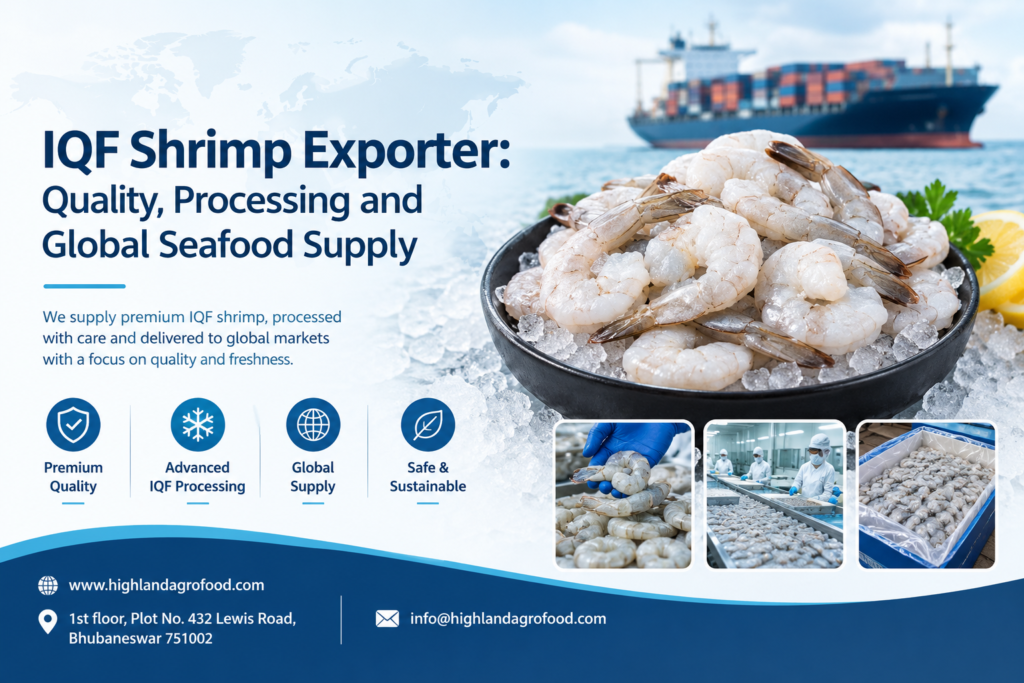
The global seafood industry depends on reliable suppliers who can deliver products with consistent quality, proper handling, and safe transportation. Frozen shrimp is an important part of this market because it is used by restaurants, food manufacturers, retailers, and seafood distributors across different countries. As international demand for convenient and ready-to-cook seafood continues, freezing technology and processing standards have become important factors in the export business.
An IQF Shrimp Exporter in India plays an important role in meeting this demand by supplying individually quick frozen shrimp for international markets. IQF technology allows individual shrimp pieces to freeze separately rather than forming one solid block. This makes portioning easier and helps maintain product quality when the shrimp is handled and stored under suitable frozen conditions.
Understanding IQF Technology in Shrimp Processing
IQF stands for Individually Quick Frozen. It is a freezing method in which shrimp are frozen individually within a controlled period. Unlike block freezing, where several shrimp pieces are frozen together, IQF processing helps keep individual pieces separate.
This method is useful for seafood buyers because they can remove the quantity they need without thawing an entire package. It also supports consistent portion sizes for food service businesses and manufacturers.
The general IQF shrimp processing process includes:
- Raw material inspection: Shrimp are checked for freshness, size, appearance, and condition before processing.
- Washing and preparation: The shrimp are cleaned and prepared according to the required product specification.
- Sorting and grading: Products are separated by size, weight, and other buyer requirements.
- Freezing: Individual shrimp pass through a quick-freezing system under controlled conditions.
- Glazing, when required: A protective layer of ice may be applied to reduce dehydration during frozen storage.
- Packing and labelling: Products are packed according to customer specifications and applicable regulations.
- Cold storage: Finished products are maintained at the required frozen temperature before dispatch.
Each stage needs proper monitoring. Processing conditions, hygiene practices, packaging quality, and temperature control all influence the final product.
Food Safety and Quality Standards in the Seafood Export Industry
Food safety is a major consideration in international seafood trade. Importers expect exporters to follow documented procedures that reduce contamination risks and maintain product quality throughout processing and transportation.
A seafood processing facility should maintain suitable hygiene conditions, trained staff, equipment sanitation, and traceability records. Hazard Analysis and Critical Control Point (HACCP) principles help businesses identify food safety hazards and establish controls at important stages of production.
Important quality and safety practices include:
- Checking raw shrimp before accepting them for processing.
- Maintaining clean processing areas and sanitised equipment.
- Monitoring product temperature during handling and freezing.
- Preventing cross-contamination between raw and finished products.
- Using food-grade packaging materials.
- Maintaining batch identification and traceability records.
- Following destination-country import requirements and customer specifications.
Certifications and regulatory approvals may also be relevant, depending on the product and export destination. Buyers should verify the applicable documents, inspection requirements, and facility approvals before placing orders.
For seafood businesses such as Highland Agro Food, consistent attention to sourcing, processing, packaging, and cold-chain management is important when serving international customers. Buyers should always review the supplier’s current certifications and product documentation rather than relying on general claims.
Sustainable Shrimp Farming and India’s Export Opportunities
India has an established position in the global seafood supply chain, with shrimp forming an important part of its seafood exports. Vannamei shrimp and black tiger shrimp are among the commercially traded varieties. Production from aquaculture farms supports processing facilities, exporters, logistics providers, and other businesses connected to the seafood industry.
Sustainable aquaculture is becoming an important topic because seafood production must balance market demand with responsible resource management. Shrimp farmers and supply-chain businesses can support better practices through careful farm management and responsible sourcing.
Some useful practices include:
- Monitoring water quality in aquaculture ponds.
- Managing feed quantities to reduce unnecessary waste.
- Maintaining appropriate stocking densities.
- Following responsible disease prevention and farm biosecurity measures.
- Managing pond water and waste responsibly.
- Maintaining farm records and product traceability.
- Working with suppliers who follow applicable aquaculture and food safety requirements.
International buyers increasingly consider more than price when selecting seafood suppliers. They may assess product consistency, documentation, traceability, processing capacity, delivery schedules, and responsible sourcing practices.
India’s export opportunities also depend on meeting the requirements of individual markets. Different countries may have specific rules for food safety, labelling, residue monitoring, packaging, and import documentation. Exporters need to understand these requirements before shipping products.
Global Market Growth, Buyer Expectations, and Conclusion
Frozen shrimp is used in several food categories, including restaurant dishes, ready meals, seafood mixes, retail packs, and processed food products. IQF products are suitable for businesses that need flexible portions and convenient storage.
Buyers generally evaluate suppliers based on several factors:
- Product specifications: Species, size count, processing style, and product form.
- Quality consistency: Similar product characteristics across different shipments.
- Food safety documentation: Relevant certificates, inspection records, and traceability information.
- Packaging options: Packaging formats and labelling that meet market requirements.
- Supply capacity: The ability to fulfil agreed quantities and delivery schedules.
- Cold-chain management: Proper frozen storage and transportation throughout the supply chain.
Digital communication has also made it easier for international buyers to research seafood suppliers, compare product specifications, and request quotations. Exporters with clear product information and accessible business communication can make the purchasing process more straightforward.
Conclusion
The global frozen shrimp market depends on reliable sourcing, suitable processing technology, food safety practices, and controlled transportation. IQF processing offers practical benefits by keeping individual shrimp pieces separate, making storage, portioning, and food preparation easier. At the same time, responsible aquaculture and proper traceability can support the long-term development of India’s seafood export industry.
For buyers, choosing a seafood supplier should involve reviewing product specifications, processing standards, documentation, and delivery capabilities. A consistent approach to these areas can help build dependable business relationships and support India’s position in international seafood markets.
Frequently Asked Questions (FAQ)
1. What does IQF mean in shrimp processing?
IQF means Individually Quick Frozen. It freezes shrimp pieces separately, making them easier to portion and use without thawing the entire pack.
2. What are the benefits of IQF shrimp?
IQF shrimp are convenient to store, handle, and portion. Individual pieces remain separate when properly frozen and stored.
3. What quality checks are important for frozen shrimp exports?
Important checks include freshness, size grading, hygiene, temperature control, packaging, traceability, and compliance with destination-market requirements.
4. Why is sustainable shrimp farming important?
Responsible farming helps manage water resources, feed use, farm waste, and biosecurity while supporting long-term seafood production.
5. How can international buyers evaluate an Indian shrimp supplier?
Buyers should review product specifications, processing facilities, food safety documentation, certifications, supply capacity, and cold-chain arrangements.
6. How can buyers request product details or quotations?
Visit the website and use the Contact Us section to enquire about product specifications, availability, and export requirements.