
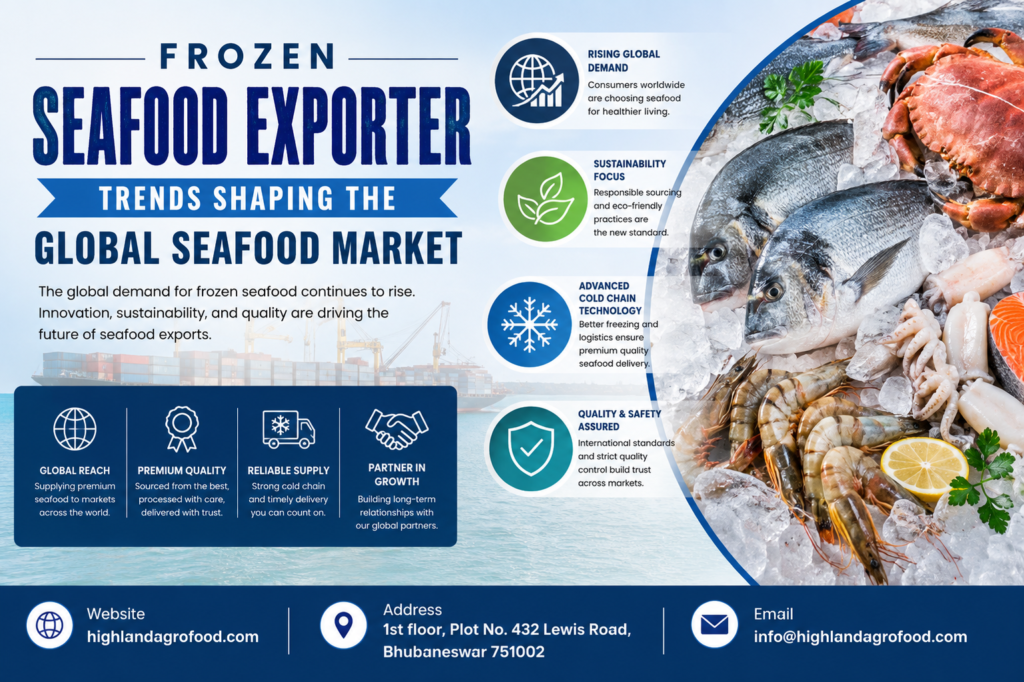
The global seafood market is changing as consumers, retailers, restaurants, and food manufacturers pay closer attention to product quality, food safety, traceability, convenience, and supply reliability. Seafood is traded across many regions, and frozen products play an important role in keeping seafood available beyond local fishing seasons.
Frozen seafood also gives buyers more flexibility. Products can be processed, packed, stored, and transported under controlled conditions before reaching their final market. This helps businesses maintain regular supply while reducing dependence on short seasonal catches.
For seafood buyers, choosing the right supplier is not only about price. Processing standards, cold-chain management, product specifications, documentation, packaging, and delivery schedules can all affect the final product. These factors are becoming more important as international seafood trade continues to develop.
Key Trends Shaping the Frozen Seafood Industry
Seafood businesses are responding to changing buying patterns and stronger expectations from customers. Several trends are influencing international seafood trade and supply chains.
- Greater focus on food safety: Importers and distributors increasingly expect suppliers to follow established food safety and processing practices.
- Demand for convenience: Frozen seafood is useful for retailers, restaurants, caterers, and food manufacturers because it can be stored and used according to demand.
- Traceability requirements: Buyers want better information about product origin, processing, packaging, and movement through the supply chain.
- Consistent product specifications: Commercial buyers often require specific sizes, grades, cuts, packaging formats, and product quantities.
- Improved cold-chain management: Maintaining suitable temperatures during processing, storage, transportation, and delivery is essential for frozen products.
- Growing interest in responsible sourcing: Sustainability and responsible seafood practices are receiving more attention from businesses and consumers.
These trends are making seafood sourcing more structured. Exporters that understand buyer requirements and maintain consistent processes are better positioned to serve international markets.
Quality, Processing, and Cold-Chain Management
Quality begins before seafood reaches the freezing stage. Handling practices, processing conditions, hygiene, freezing methods, packaging, and storage all influence the final product.
For frozen seafood, temperature control is particularly important. A reliable cold chain helps protect product quality throughout different stages of movement. Breaks in temperature control can affect texture, appearance, shelf life, and overall product condition.
Processing facilities also need clear procedures for handling seafood. Depending on the product, this can include sorting, cleaning, peeling, grading, freezing, glazing, packing, and storage.
Packaging is another important consideration. It needs to protect the product during storage and transportation while providing useful information for buyers and regulators. Product labels may include details such as:
- Product name and specification
- Net weight
- Batch or lot information
- Storage conditions
- Production or packing details
- Country of origin
- Relevant certification information
For importers, consistency is often just as important as product quality. A buyer supplying supermarkets or restaurants needs products that match agreed specifications from one shipment to the next.
This is why working with an experienced Frozen Seafood Exporter can help businesses manage regular procurement requirements. A dependable supplier should be able to communicate product specifications clearly and maintain appropriate processing and storage practices.
Global Seafood Trade and Buyer Expectations
International seafood trade involves more than moving products from one country to another. Buyers and suppliers need to coordinate documentation, product specifications, logistics, payment terms, packaging requirements, and delivery schedules.
Different markets may also have different import requirements. Businesses involved in seafood trade therefore need to understand the regulations applicable to their destination market.
Reliable communication can make the procurement process easier. Buyers should be able to receive clear information about available products, sizes, packaging formats, minimum order quantities, expected production schedules, and shipment arrangements.
For seafood businesses, supplier evaluation can include several practical factors:
- Processing and hygiene standards
- Product consistency
- Cold-storage facilities
- Packaging options
- Export documentation
- Shipping and logistics arrangements
- Ability to meet order specifications
- Communication and response time
- Market experience
- Compliance with destination-market requirements
Highland Agro Food focuses on seafood supply with attention to product handling, processing, packaging, and international market requirements. For buyers, these areas can support smoother procurement and help create a more predictable supply relationship.
Another important trend is the use of digital communication in seafood sourcing. Buyers can now compare suppliers, request specifications, discuss orders, and exchange documentation without relying entirely on in-person meetings. This has made communication faster, although businesses still need to verify supplier credentials and product information before entering commercial agreements.
Future Opportunities for Seafood Export Businesses
The seafood industry has opportunities to grow as global consumers continue to include fish and shellfish in their diets. At the same time, businesses face pressure to improve efficiency, maintain food safety, control costs, and respond to environmental concerns.
Technology can support this development. Better inventory systems, temperature monitoring, production tracking, and digital documentation can help seafood companies manage their operations more effectively.
Product diversification can also create opportunities. Buyers may look for different shrimp sizes, seafood cuts, packaging formats, or products suited to retail and food-service applications. Exporters that understand these requirements can build stronger relationships with different types of customers.
Sustainability is likely to remain an important part of seafood discussions. Buyers increasingly want information about sourcing practices, supply-chain transparency, and responsible production. Businesses that can provide clear and verifiable information may have an advantage when dealing with quality-focused markets.
The future of seafood exports will also depend on logistics. International shipping costs, port operations, storage capacity, and delivery schedules can influence the final price and availability of seafood products. Strong supply-chain planning can therefore make a significant difference.
For buyers, the practical approach is to look beyond promotional claims and evaluate suppliers based on measurable factors such as specifications, documentation, processing practices, communication, and delivery performance.
Conclusion
The global seafood market is becoming more organized around quality, safety, traceability, convenience, and reliable supply. Frozen seafood remains important because it allows businesses to store products and serve customers across different locations and seasons.
For exporters and buyers alike, successful seafood trade depends on consistent processes and clear communication. Businesses that invest in food safety, cold-chain management, responsible sourcing, efficient logistics, and customer service can build stronger long-term relationships.
As international seafood demand continues to develop, suppliers that understand market requirements and maintain dependable standards will be better prepared to compete. For buyers, choosing a supplier based on quality, consistency, compliance, and reliability can make seafood procurement more efficient and predictable.
FAQs
1. What does a seafood exporter provide?
A seafood exporter supplies processed seafood products to buyers in international markets. Product specifications, packaging, documentation, and shipping arrangements can vary by supplier and destination.
2. How can I evaluate a seafood supplier?
Check product specifications, processing standards, certifications, packaging, storage practices, documentation, and delivery capabilities before placing an order.
3. Why is cold-chain management important?
Temperature control helps maintain the quality and condition of frozen seafood during processing, storage, transportation, and delivery.
4. How can I request product information?
Businesses interested in product specifications, availability, or export requirements can use the Contact Us section to communicate their requirements.
5. What should I include when contacting a seafood supplier?
Mention the product required, quantity, preferred specifications, destination market, packaging needs, and expected delivery schedule to help the supplier respond accurately.
6. Where can I find more information?
Visit the website for company and product information, or use the Faq section to review common questions before making an enquiry.